Root Words, Prefixes and Suffixes
Unit: The Building Blocks of Words
Hello, learners! Have you ever come across a long or unfamiliar word and wondered what it meant? It might seem like magic, but many words are built using smaller parts.
Once you learn to recognize these parts, you'll be like a detective, able to figure out the meaning of new words you see. These word parts are called root words, prefixes, and suffixes.
This unit will help you become an expert at finding these building blocks. Get ready to expand your vocabulary and become a word wizard!
Lesson 1: The Root of the Word
What is a Root Word?
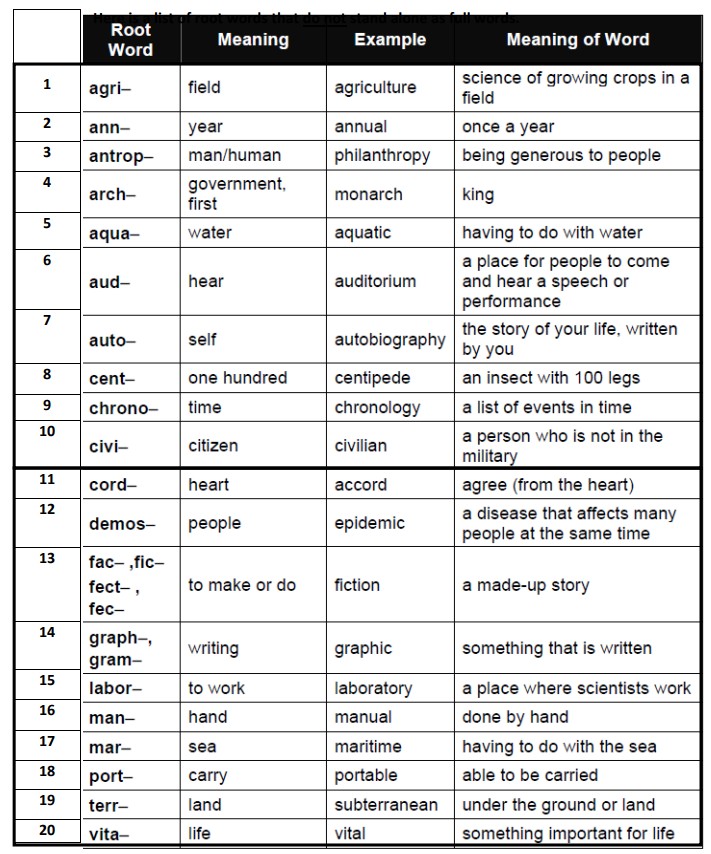
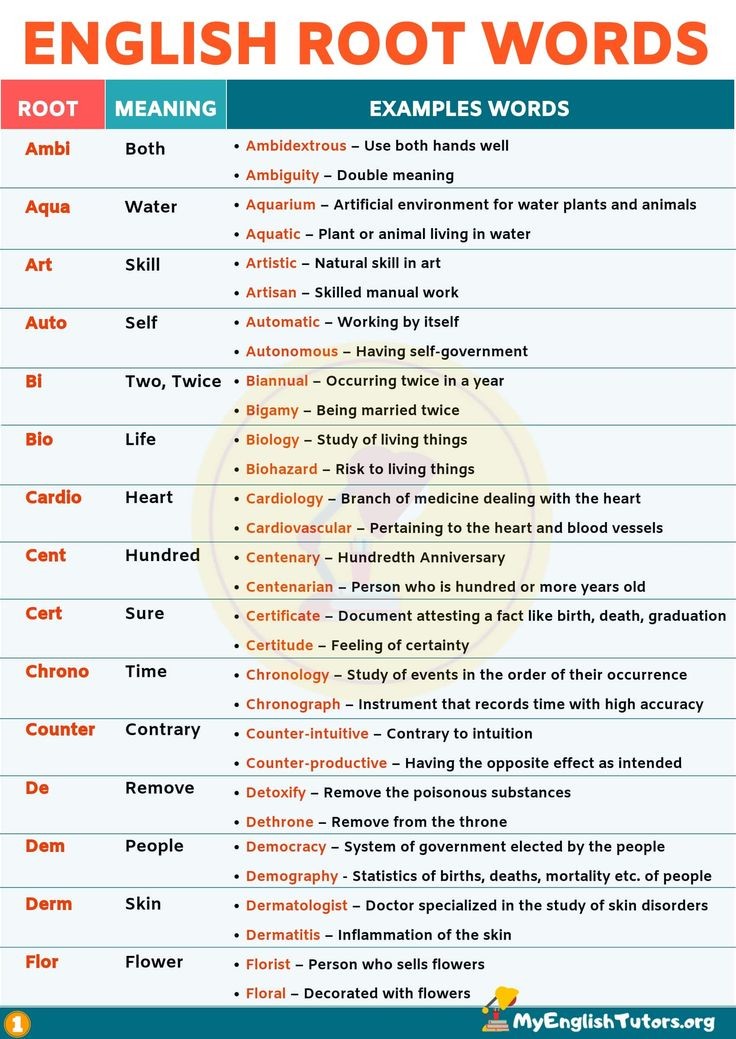
A root word is the most basic part of a word that carries its fundamental meaning. It cannot be broken down into smaller parts and is often derived from Latin or Greek.
Many English words are built by adding prefixes (to the beginning) and suffixes (to the end) to a root word. Knowing the meaning of common root words and affixes (prefixes and suffixes) can help you decode unfamiliar vocabulary.
Feature |
Root Word |
Base Word |
Can stand alone? |
Not always. Many are from Latin or Greek and cannot be used as independent English words (e.g., rupt and aud). |
Always. A base word is a complete, standalone English word that can also have affixes added to it (e.g., happy is the base word of unhappy). |
Example |
The Latin root rupt ("to break") is used to form words like disruption and erupt but cannot stand alone. |
The word happy can stand alone but can also be the basis for unhappy or happiness. |
Roots that can stand alone
These are also considered base words.
Act (to move or do): actor, re-action
Form (shape): formulate, conform, formation
Legal (law): legality, illegal
Port (carry): transport, export, import
Roots that cannot stand alone
These are typically of Latin or Greek origin and require affixes to become a complete English word.
Aud (hear): audio, audible, audience
Hydr (water): hydrate, dehydrate, hydrant
Ject (throw): project, eject, reject
Logy (study of): biology, psychology
Phon (sound): telephone, symphony
Struct (build): construct, destruction
Lesson 2: Prefixes—The Words That Come First
What is a Prefix?
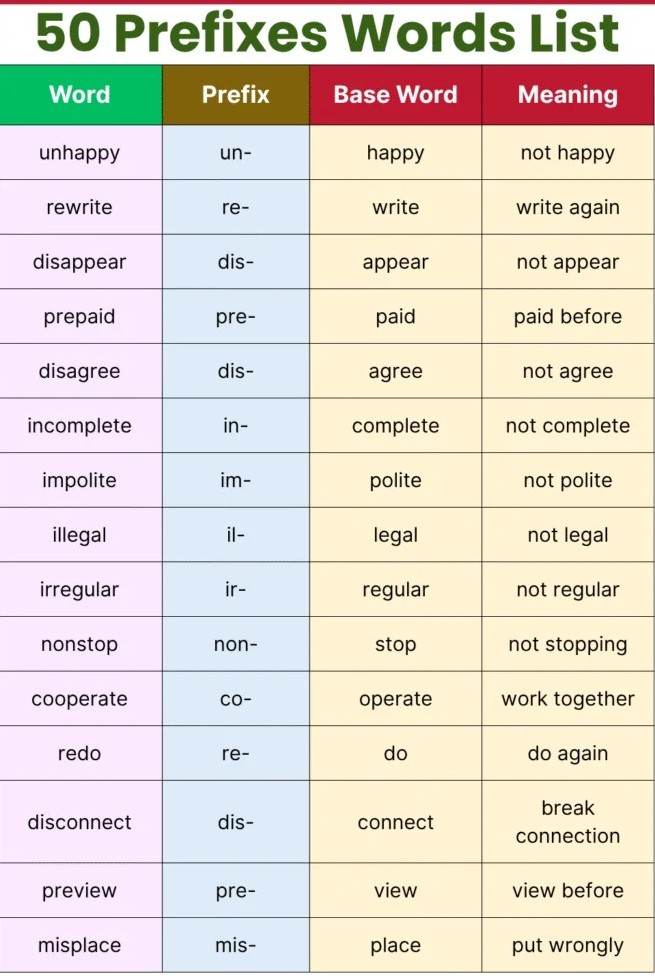
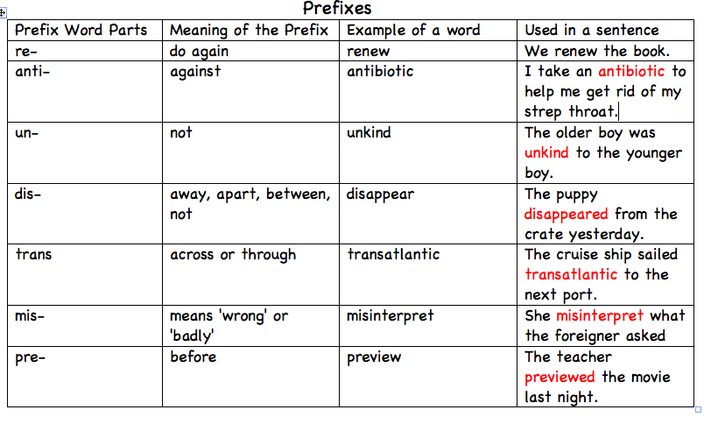
A prefix is a group of letters that is added to the beginning of a root word. Adding a prefix changes the meaning of the root word. The prefix itself does not stand alone as a word.
Think of the word "pre" in "prefix." It means "before." So, a prefix comes before the root word.
Lesson 3: Suffixes—The Words That Come Last
What is a Suffix?
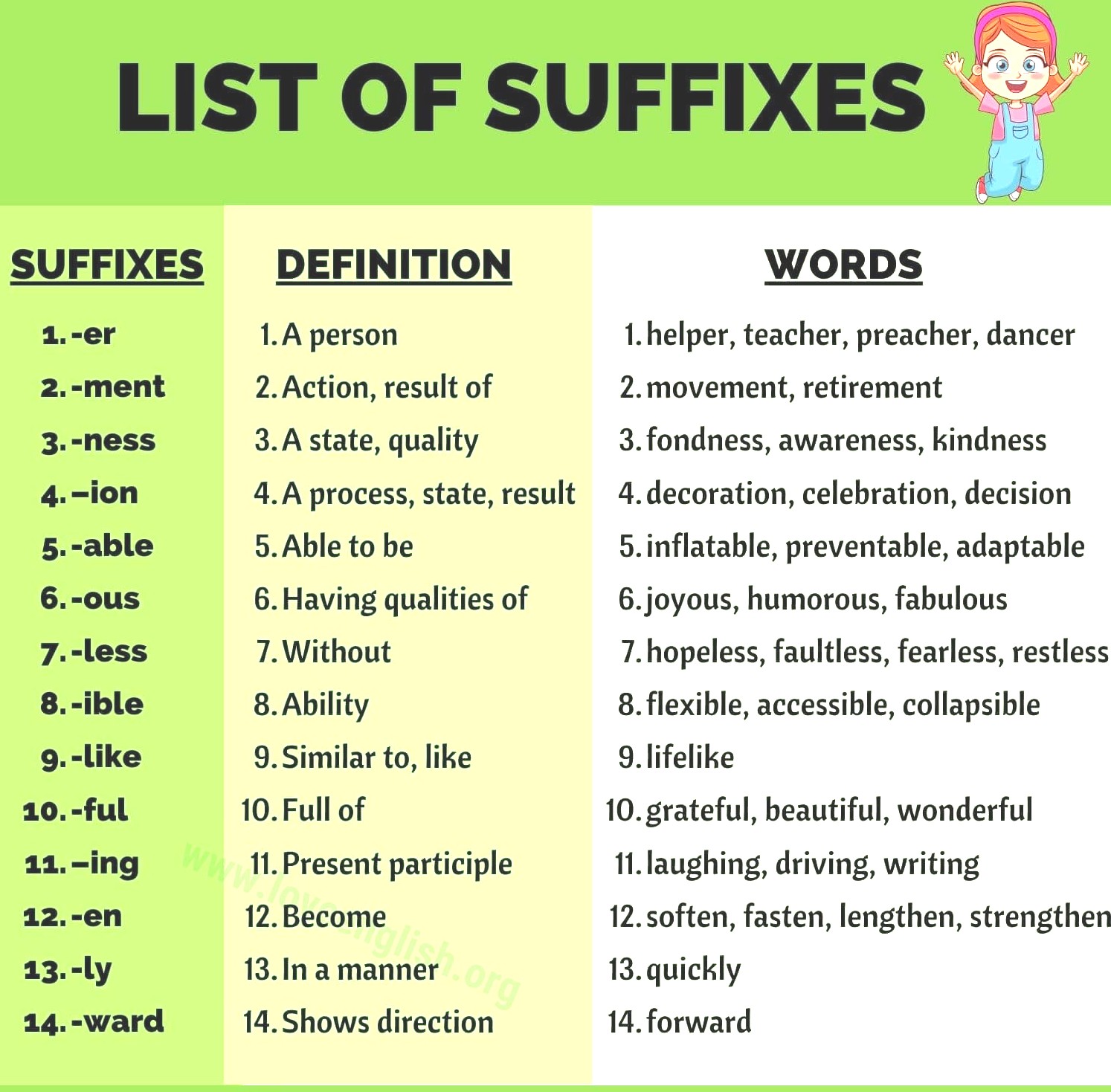
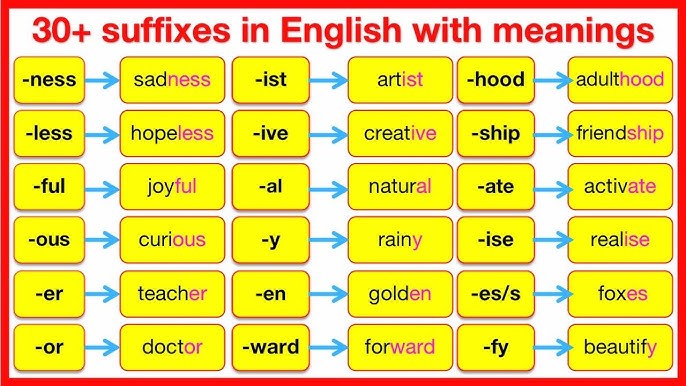
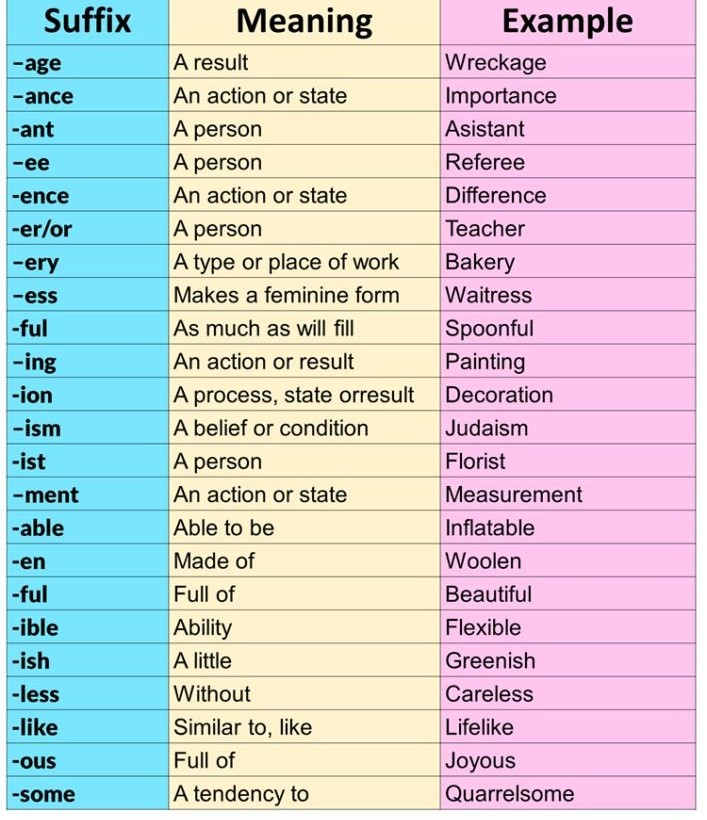
A suffix is a group of letters that is added to the end of a root word. Adding a suffix can also change the meaning of a root word. Sometimes, it can even change a word from one part of speech to another (like from a noun to an adjective).
Lesson 4: Putting It All Together
Finding All the Parts
Now that you know all the parts, you can put your word detective skills to the test! Look at the following words. Some have a prefix, some have a suffix, and some have both!