Grade 6 Science: The Nervous System
Overview
This lesson is designed for you to investigate the nervous system, the body's control and communication network. You will learn about its main parts, how it sends and receives messages, and the importance of taking care of this vital system. The lesson includes hands-on activities to help you understand the concepts in a fun and interactive way.
Lesson 1: The Body's Control Center
Learning Objectives:
What is the Nervous System?
The nervous system is like a command center for your body. It controls and coordinates all your actions, thoughts, and emotions.
It allows you to sense the world around you and respond to it. This system is divided into two main parts:
1. Central Nervous System (CNS):
The Brain: The main control center. It's where all the information is processed, and it sends instructions to the rest of the body. The brain has different parts that control different functions, such as thinking, remembering, and movement.
The Spinal Cord: A long bundle of nerves that runs down your back, inside your backbone. It's the main communication highway that connects the brain to the rest of the body.
2. Peripheral Nervous System (PNS):
Nerves: The nerves are like the wires of the nervous system. They branch out from the brain and spinal cord to reach every part of your body, including your skin, muscles, and organs.
Lesson 2: How Messages are Sent
Learning Objectives:
The Messenger Cells: Neurons
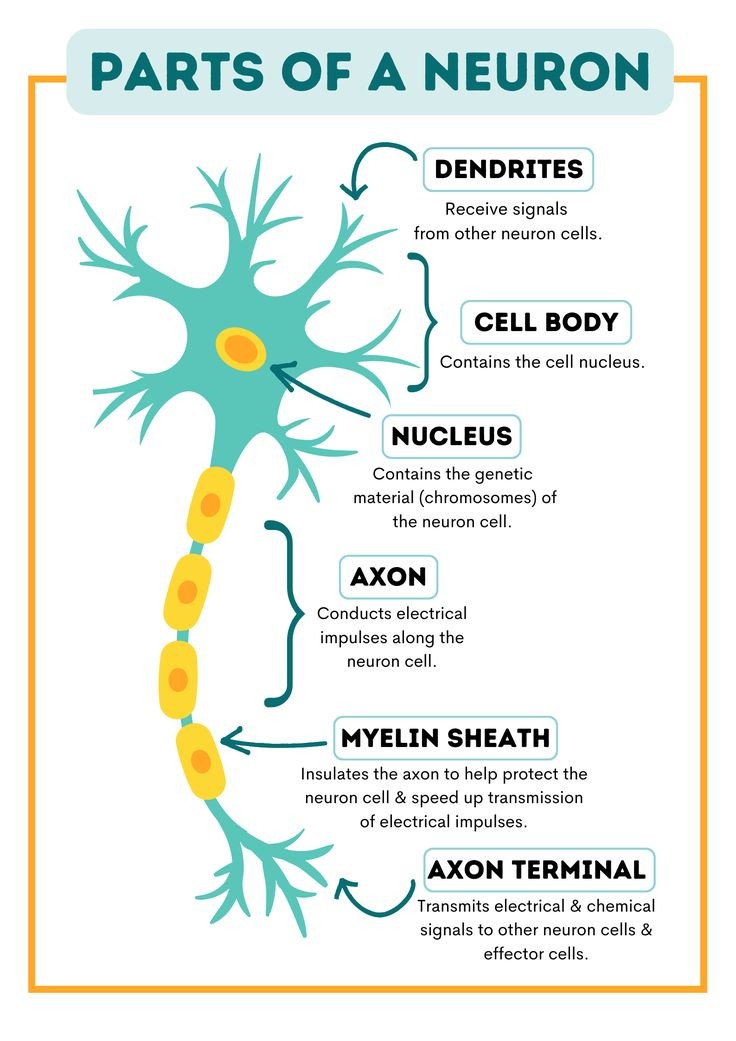
The nervous system's messages are carried by special cells called neurons. Neurons use electrical and chemical signals to communicate with each other.
A neuron has three main parts:
1. Dendrites: Receive messages from other neurons.
2. Cell Body: Contains the neuron's nucleus and keeps it alive.
3. Axon: A long fiber that sends messages to other neurons.
Types of Neurons:
Sensory Neurons: Carry messages from your senses (e.g., touch, smell, sight) to the brain and spinal cord.
Motor Neurons: Carry messages from the brain and spinal cord to your muscles and glands, telling them what to do.
Interneurons: Found in the CNS, they connect sensory and motor neurons.
The Reflex Arc:
Sometimes, a message doesn't need to go all the way to the brain. This is called a reflex arc.
For example, if you touch something hot, your sensory neurons send a message to your spinal cord, which quickly sends a message back through motor neurons to make you pull your hand away—all before your brain even fully processes the pain.
Lesson 3: Keeping a Healthy Nervous System
Learning Objectives:
Healthy Habits for a Healthy Nervous System:
1. Eat a Balanced Diet: Nutritious food gives your brain the energy it needs to function well.
2. Get Enough Sleep: Rest is crucial for the brain to recharge and consolidate memories.
3. Exercise Regularly: Physical activity increases blood flow to the brain and reduces stress.
4. Protect Your Head: Always wear a helmet when biking or playing sports to prevent serious brain injuries.
5. Avoid Harmful Substances: Drugs and alcohol can seriously damage the nervous system.
Potential Dangers:
1. Head Injuries: A hard hit to the head can cause a concussion or even permanent brain damage.
2. Spinal Cord Injuries: Any injury to the spinal cord can disrupt communication between the brain and the body, leading to paralysis.
3. Lack of Sleep: Chronic lack of sleep can impair concentration, memory, and mood.
Assessment
Part I: Multiple Choice
Choose the letter of the correct answer.
1. What is the main function of the nervous system?
a. Pumping blood
b. Digesting food
c. Controlling and coordinating body functions
d. Providing oxygen
2. Which part of the nervous system consists of the brain and spinal cord?
a. Peripheral Nervous System (PNS)
b. Central Nervous System (CNS)
c. Motor Neurons
d. Sensory Neurons
3. What are the specialized cells that carry messages in the nervous system called?
a. Blood cells
b. Neurons
c. Muscles
d. Glands
4. What is the fast, involuntary response to a stimulus called?
a. A thought
b. A memory
c. A reflex
d. A dream
5. Which of the following is a healthy habit for the nervous system?
a. Playing sports without a helmet
b. Getting enough sleep
c. Staying up all night
d. Avoiding exercise
Part II: Short Answer
Answer the following questions in a few sentences.
1. Explain the difference between the Central Nervous System (CNS) and the Peripheral Nervous System (PNS).
2. Describe how a neuron sends a message.
3. Why is it important to wear a helmet when riding a bike?
4. Give an example of a reflex action.
5. How does a good night's sleep help your nervous system?