
PHYSICAL EDUCATION VI
Assessment of physical activities and physical fitness
The Philippine Physical Activity Pyramid is a visual guide created to promote a balanced and healthy lifestyle among Filipinos.
Similar to the food pyramid, it structures different physical activities into four levels based on intensity and frequency. The goal is to encourage people to reduce sedentary behaviors and gradually increase their daily physical activity.
Structure of the pyramid
The pyramid is organized into four levels, from the most frequent and less intense activities at the wide base to the least frequent and most intense activities at the narrow peak.
Level 1: Everyday activities
This forms the base of the pyramid and includes light physical activities that can be easily integrated into your daily routine. They should be performed as often as possible.
Examples: Taking the stairs instead of the elevator, walking to school or the store, doing household chores like sweeping and mopping, gardening, and playing with pets.
Level 2: Moderate to vigorous activities
These are more intense aerobic activities that raise your heart rate. They should be done about three to five times a week.
Examples: Brisk walking, jogging, cycling, swimming, dancing, and playing sports like basketball, volleyball, and badminton.
Level 3: Strength and flexibility exercises
These exercises focus on improving muscle strength, flexibility, and balance. The pyramid recommends doing these two to three times a week.
Examples: Yoga, Pilates, stretching exercises, push-ups, and lifting weights.
Level 4: Minimal or sedentary activities
This is the peak of the pyramid and represents activities that should be limited or minimized. A sedentary lifestyle is associated with various health risks.
Examples: Watching TV for long periods, excessive use of gadgets like phones and computers, and sitting or lying down for extended hours.
How to use the pyramid
The pyramid's design teaches that balance is key to a healthy lifestyle.
FITNESS INDICATORS
Fitness indicators are tools or methods used to
measure and observe a student's physical
health and athletic abilities.
Think of them as the markers that show how
well your body is functioning in terms of fitness.
These indicators are not just numbers; they provide valuable information to help us:
There are two main categories of fitness indicators, which measure different aspects of physical health.
Health-related fitness indicators
These indicators measure the components of fitness that are important for overall health and preventing lifestyle diseases.
1. Cardiovascular Endurance: How well your
heart and lungs can work during extended
physical activity.
Indicator: After running for a set time or
doing a step test, a fitness indicator would
be how quickly your heart rate returns to normal.
2. Muscular Strength: The maximum amount
of force your muscles can produce in a
single effort.
Indicator: The number of push-ups you can
do measures your upper body muscular strength.
3. Muscular Endurance: The ability of your
muscles to repeat contractions over and over
without getting tired.
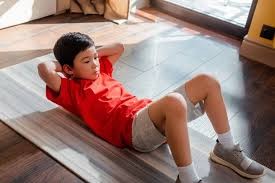
Indicator: The number of sit-ups or curl-ups
you can do in one minute measures your
abdominal muscular endurance.
4. Flexibility: The ability of your joints and
muscles to move through their full range of motion.
Indicator: The "sit and reach" test measures
how far you can stretch your body forward.
5. Body Composition: The proportion of body
fat to lean body tissue, such as muscle and bone.
Indicator: Your body mass index (BMI),
which is calculated from your height and weight,
can be a basic indicator of your body composition.
Skill-related fitness indicators
These indicators measure the components of fitness that are more specific to sports and athletic performance.
Indicator: The time it takes to complete a "shuttle run," which involves running back and forth between two points.
Indicator: The "stork stand" test, where you see how long you can balance on one leg.
Indicator: The time it takes to run a short distance, like a 50-meter dash.
Indicator: How far you can jump from a standing position, which measures the power in your legs.
Indicator: The "stick drop" test, which measures how quickly you can catch a falling ruler.
Philippine Invasion Games for Children
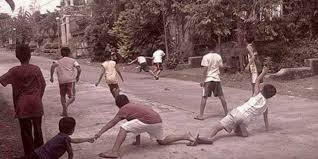
Several traditional Filipino games fall under the category of "invasion games," where teams try to enter or capture each other's territory.
These games are not only fun but also promote physical activity, teamwork, strategic thinking, and social interaction among children.
Here are some examples of Philippine invasion games suitable for children:
Agawan Base ("Capture the Base")
Objective: To capture the opposing team's base by tagging it without being tagged by an opponent.
Mechanics:
Lawin at Sisiw ("Hawk and Chickens")
Objective: For the hawk to catch the chicks while the hen tries to protect them.
Mechanics:
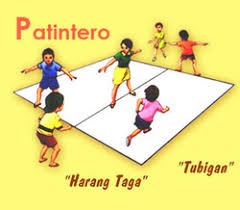
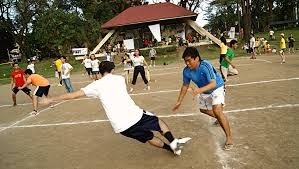
Patintero ("Block the Enemy Game" / "Harang Taga")
Objective: To cross a series of lines without being tagged by the guarding team.
Mechanics:
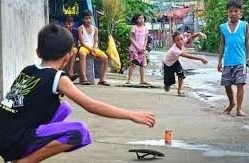
Tumbang Preso ("Knock Down the Can" / "Fallen Prisoner")
Objective: Players try to hit and knock down a can with their slippers or a stone ("pamato"), while a designated "it" guards the can and tries to tag players.
Mechanics:
These games are excellent for developing physical fitness, including speed, agility, and coordination. They also foster important values such as teamwork, sportsmanship, and strategic thinking.
What are the skills involved in the above games?
The traditional Filipino invasion games mentioned above—Agawan Base, Lawin at Sisiw, Patintero, and Tumbang Preso—involve a wide range of skills.
These can be categorized into three main areas: physical (or motor), cognitive, and social skills.
Physical (Motor) skills
These games provide a comprehensive workout that develops a student's agility, speed, and endurance.
Running and Speed: All four games require players to run, often at top speed, to tag an opponent, escape to a safe zone, or retrieve an object.
Agility and Dodging: Players must quickly change direction and evade opponents. This is especially true for the "chickens" in Lawin at Sisiw, the "passers" in Patintero, and the players trying to retrieve their slipper in Tumbang Preso.
Balance and Coordination: This is vital for all players, particularly for the "passers" in Patintero, who must move precisely along the lines without being tagged. In Tumbang Preso, players must maintain balance while throwing their slipper and dodging the "it".
Throwing and Accuracy: Tumbang Preso specifically develops a player's ability to throw accurately to knock down the can.
Body Control: In Lawin at Sisiw, the line of "chickens" must use coordinated body movements to stay connected and move as a unit while the "hen" shields them.
Jumping: While less prominent, games like Agawan Base might involve jumping to avoid being tagged.
Cognitive skills
Beyond physical exertion, these games are strategic and mentally demanding.
Strategic Thinking: Players must constantly analyze the game situation and devise a strategy.
In Agawan Base, teams must coordinate when to attack and when to defend.
In Patintero, passers must figure out the best timing and path to get through the lines.
Spatial Awareness: Players need to be aware of their position relative to their teammates, opponents, and key objects or areas like the can, the base, or the game lines.
Quick Decision-Making: In fast-paced games like Agawan Base and Tumbang Preso, players need to make split-second decisions on whether to advance, retreat, or act as a decoy.
Critical Thinking: These games challenge players to think on their feet and find solutions to in-game problems.
Social skills
Because these are team-based games, they foster cooperation and communication.
Teamwork and Cooperation: Success in games like Agawan Base and Patintero is dependent on coordinated team effort. In Lawin at Sisiw, the "chickens" and "hen" work together to protect each other.
Communication: Players must communicate effectively with their teammates, using both verbal and non-verbal cues to coordinate attacks and defense.
Sportsmanship: Players learn to respect the rules, their opponents, and to accept victory and defeat gracefully.
Leadership: These games provide opportunities for certain players to take on leadership roles, guiding their team and motivating others.
The value of participation in
physical activities
The value of participation in physical
activities goes far beyond simply
improving physical fitness. It is crucial
for a person's overall well-being,
contributing to their physical, mental,
emotional, and social development.
Physical health benefits
Stronger Body: Regular physical activity helps build and maintain strong bones, muscles, and joints. This reduces the risk of developing conditions like osteoporosis and bone fractures later in life.
Healthy Weight: Participation in physical activities helps manage weight by burning calories and preventing excessive fat accumulation. This lowers the risk of obesity, a major health concern.
Improved Heart and Lung Function: Aerobic exercises strengthen the heart and lungs, improving blood circulation and lowering blood pressure and cholesterol levels. A healthy cardiovascular system protects against serious conditions like heart disease and stroke.
Disease Prevention: Regular physical activity significantly lowers the risk of developing chronic diseases such as type 2 diabetes, certain types of cancer, and metabolic syndrome.
Mental and emotional benefits
Better Mood and Reduced Stress: Exercise stimulates the release of endorphins, natural mood-lifters that can help reduce feelings of stress, anxiety, and depression.
Boosted Self-Esteem: Achieving goals in physical activities and improving one's physical abilities can boost confidence and improve overall self-esteem.
Improved Brain Function: Physical activity increases blood flow to the brain, which improves concentration, memory, and cognitive skills. This can lead to better academic performance and learning in school.
Better Sleep: Regular exercise helps promote better and deeper sleep, which is essential for overall health and energy levels.
Social and academic benefits
Enhanced Social Skills: Engaging in team sports or group games provides opportunities to interact with peers, learn teamwork, and develop communication skills. These experiences help build friendships and a sense of belonging.
Positive Social Behavior: Team-based physical activities teach important social behaviors like cooperation, following rules, and respecting others.
Improved School Performance: Students who are physically active often show better concentration, behavior, and academic performance in school.
Increased Self-Discipline: Sticking to a training schedule, following rules, and working towards a goal in sports can teach valuable lessons in discipline and perseverance.
Long-term benefits
Healthy Habits for Life: Studies show that active children are more likely to become active adults. By developing a positive attitude toward physical activity early on, a person can build healthy habits that last a lifetime.
Higher Quality of Life: Ultimately, regular physical activity contributes to a higher quality of life, allowing individuals to enjoy daily activities with more energy, mobility, and confidence.
SAFETY PRECAUTIONS
Reasons for observing safety precautions
Injury Prevention: The most obvious reason
is to prevent injuries such as sprains, fractures,
bruises, and concussions that can occur from
falls, collisions, or improper form.
Encourages Participation: When students feel
safe, they are more likely to participate fully and
confidently in the activities, which enhances their
enjoyment and learning experience.
Fosters Discipline and Respect: Following safety rules teaches students discipline and respect for the game, their opponents, and themselves. It reinforces the importance of fair play and controlled movements.
Promotes Lifelong Activity: A positive and safe experience with physical activity in childhood encourages students to continue being active throughout their lives.
General safety precautions for physical activities
Before the activity
Warm-up and Stretching: Always begin with a proper warm-up to prepare the muscles and joints for more strenuous activity. This increases blood flow, flexibility, and muscle efficiency, reducing the risk of strains and sprains.
Check the Playing Area: The teacher or students should inspect the area for any hazards, such as rocks, holes, slippery surfaces, or broken equipment.
Wear Proper Attire: Students should wear comfortable, appropriate clothing and shoes that provide good support. For certain games, protective gear like knee pads or helmets might be necessary.
Pre-game Health Check: Students should report any existing injuries or if they are feeling unwell, as some conditions may limit their participation.
During the activity
Know and Follow Rules: Teachers should explain the rules and the importance of fair play. Students must understand what is and is not allowed to prevent accidents.
Use Proper Technique: Students should be reminded to use the correct form, such as proper footwork in Patintero or throwing motion in Tumbang Preso, to avoid injury.
Watch Opponents: During invasion games, students must be aware of their opponents' movements and maintain a safe distance to avoid collisions.
Avoid Rough Play: Pushing, hitting, or other forms of rough physical contact should be strictly avoided. For games involving tagging, a light, controlled tap should be used instead of a strong shove.
Stay Hydrated: Remind students to drink water before, during, and after physical activity to prevent dehydration, especially in a hot climate.
After the activity
Cool-down: A cool-down period with light activity and stretching helps the body gradually return to its resting state. This prevents blood pooling and reduces muscle soreness.
Reporting Injuries: Any injuries, no matter how minor they seem, should be reported to the teacher immediately. Ignoring injuries can lead to more serious complications.
Equipment Storage: Equipment should be properly stored to prevent it from becoming a tripping hazard.
Health-related fitness components
Health-related fitness refers to the components of
physical fitness that are directly linked to a person's
overall health and well-being.
Regular participation in activities that develop
these components can help prevent diseases
and maintain a functional, healthy body.
Cardiovascular Endurance: The ability of the heart, lungs, and blood vessels to supply oxygen to the body's muscles during prolonged exercise.
Invasion Game Relevance: Long, fast-paced games of Agawan Base or Patintero require players to run for extended periods without tiring easily.
Example Activity: A three-minute step test to measure heart rate recovery.
Muscular Strength: The maximum amount of force a muscle or muscle group can exert in a single contraction.
Invasion Game Relevance: In Agawan Base, using your legs to quickly push off and accelerate requires muscular strength.
Example Activity: The number of push-ups a student can perform correctly.
Muscular Endurance: The ability of a muscle or muscle group to perform repeated contractions over a period of time without fatigue.
Invasion Game Relevance: The "hen" in Lawin at Sisiw uses muscular endurance in their arms and legs to continuously block the "hawk" while protecting the "chickens."
Example Activity: The number of curl-ups or sit-ups a student can perform in one minute.
Flexibility: The ability to move the joints and muscles through their full range of motion.
Invasion Game Relevance: Dodging and swerving in Patintero require good flexibility in the hips and knees to avoid injury.
Example Activity: A "sit and reach" test to measure hamstring and lower back flexibility.
Body Composition: The proportion of fat mass to lean body mass (muscle, bone, and water).
Invasion Game Relevance: A healthy body composition is beneficial for all games as it contributes to a higher power-to-weight ratio, which is good for speed and agility.
Example Activity: Calculating Body Mass Index (BMI) using height and weight.
Skill-related fitness components
Skill-related fitness refers to the components that enhance athletic performance and are particularly important for success in sports and games.
Agility: The ability to change direction and position of the body quickly and efficiently.
Invasion Game Relevance: Players in all games, especially the "passers" in Patintero, need high levels of agility to quickly change direction to evade being tagged.
Example Activity: A shuttle run test.
Balance: The ability to maintain equilibrium while stationary (static) or moving (dynamic).
Invasion Game Relevance: In Tumbang Preso, players need to balance while throwing their "pamato" and when retrieving it in the scramble.
Example Activity: The stork stand test.
Coordination: The ability to use different body parts together smoothly and efficiently.
Invasion Game Relevance: In Tumbang Preso, players need hand-eye coordination to aim their slipper and foot-eye coordination when running and dodging.
Example Activity: A juggling test.
Power: The ability to perform a movement with maximum force in the shortest amount of time, combining strength and speed.
Invasion Game Relevance: In Tumbang Preso, power is used when a player throws their "pamato" to knock down the can.
Example Activity: The standing long jump test.
Speed: The ability to perform a movement or cover a distance in a short period.
Invasion Game Relevance: Players need speed to quickly tag opponents in Agawan Base and run to safety before being tagged.
Example Activity: A 50-meter dash.
Reaction Time: The time it takes to respond to a stimulus.
Invasion Game Relevance: In Tumbang Preso, the "it" needs a quick reaction time to grab the slipper before a player can retrieve it.
Example Activity: The stick drop test.

ARTS VI: Elements of Arts
I. Elements of Art: The Building Blocks
Learning Objectives:
1. Shapes
Definition: A shape is a two-dimensional, flat, enclosed area. It has height and width.
Types:
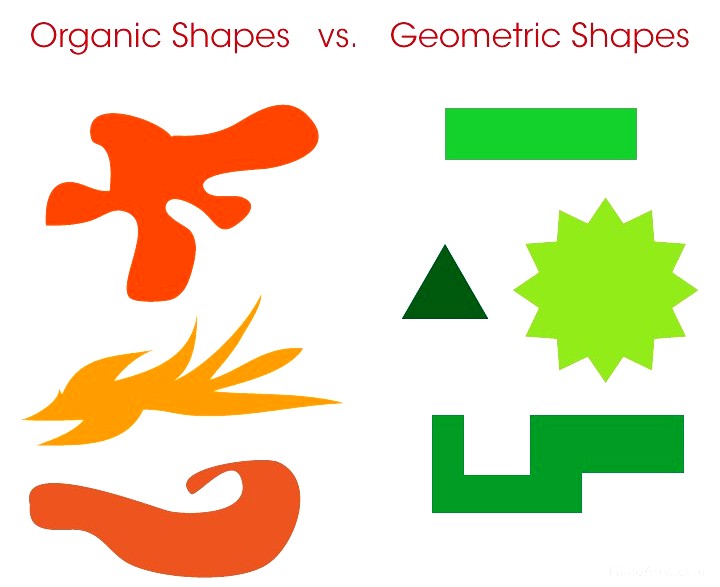
Geometric Shapes: Regular, precise shapes like squares, circles, and triangles. They are often used to create a sense of order and structure.
Organic Shapes: Irregular, free-flowing shapes found in nature, like leaves, rocks, or a puddle. They are often used to evoke a natural, more relaxed feeling.
2. Space
Definition: Space is the area around, within, or between objects in an artwork. It helps create a sense of depth and dimension.
Types:
Positive Space: The area occupied by the main object or subject of the artwork.
Negative Space: The empty or open areas surrounding the main object. Thinking about negative space can help improve composition.
3. Color is the element of art that is produced when light, striking an object, is reflected back to the eye.
II. Principles of Art: The Rules of Design
Learning Objectives:
4. Emphasis
Definition: Emphasis is the principle of design that uses elements to draw attention to a certain area, creating a focal point.
How to create emphasis: Artists can use color (a bright color against a neutral background), size (a large object next to smaller ones), or placement to make one part of the artwork stand out.
5. Harmony
Definition: Harmony is a pleasing arrangement of similar elements in an artwork. It creates a sense of unity and cohesion.
How to create harmony: Using a similar color scheme, repeating a certain shape or line, or using elements that belong together.
6. Contrast
Definition: Contrast is the arrangement of opposite elements and effects. It creates visual interest, excitement, and drama.
How to create contrast: Using opposing colors (e.g., black and white), different textures, or a mix of geometric and organic shapes.
III. Process: Digital Poster Design
Learning Objectives:
7. Digital Painting and Graphic Design (Poster)
Definition: Digital Painting is the art of creating paintings on a computer using software and digital tools.
Graphic Design is the process of creating visual content to communicate messages, often used for posters, logos, and websites.
Tools:
Hardware: Computer, laptop, or tablet.
Software: Simple, free applications like MS Paint, Canva, or more advanced programs like Adobe Photoshop (teacher discretion).
Activity: "My Digital Poster"
Instruction:
Instruction:
Saving and Sharing: Save your work as an image file and share it with the class or display it digitally.
Assessment
Part I: Multiple Choice
1. Which type of shape is regular and precise?
a) Organic
b) Geometric
c) Negative
d) Intermediate
2. The area occupied by the main subject of an artwork is called:
a) Negative space
b) Empty space
c) Positive space
d) Outer space
3. Mixing a primary and a secondary color creates a(n):
a) Warm color
b) Cool color
c) Primary color
d) Intermediate color
4. The principle of design that uses opposite elements is:
a) Harmony
b) Emphasis
c) Contrast
d) Balance
5. What can you use to create a digital poster?
a) A paintbrush
b) MS Paint
c) A pencil
d) A marker
Part II: Performance Task Rubric (Digital Poster)
Concept (10 points):
The poster clearly communicates a chosen theme.
Use of Elements (10 points):
The poster effectively uses shapes, space, and color.
Use of Principles (10 points):
The poster successfully applies emphasis, harmony, and contrast.
Creativity and Originality (10 points):
The design is creative and shows original ideas.

MUSIC VI: MELODY
Lesson 1: What is a Melody?
Learning Objectives:
What is a Melody?
A melody is the main tune of a song. Think of it as the part you hum or sing along to.
It is a series of musical notes arranged in a specific order. When notes are played one after another, they form a melody.
Introducing Intervals
An interval is the distance between two notes.
The notes can be played one after another (melodic interval) or at the same time (harmonic interval).
You can think of intervals like steps on a staircase. A small interval is like taking one step, while a large interval is like skipping several steps at once.
Types of Intervals:
An interval is the distance between two notes. Intervals can be described as:
Step – moving from one note to the very next note (e.g., from C to D).
Skip – moving by more than one step (e.g., from C to E).
Leap – jumping across several notes (e.g., from C to G).
Lesson 2: Happy and Bright - The Major Scale
Learning Objectives:
Introducing the Major Scale
A major scale is a specific pattern of eight musical notes that starts and ends on the same note.
Major scales are known for their happy, bright, and cheerful sound.
The pattern of whole steps (W) and half steps (H) for any major scale is: W-W-H-W-W-W-H.
A whole step is an interval that skips one note, while a half step is the smallest interval, moving to the very next note.
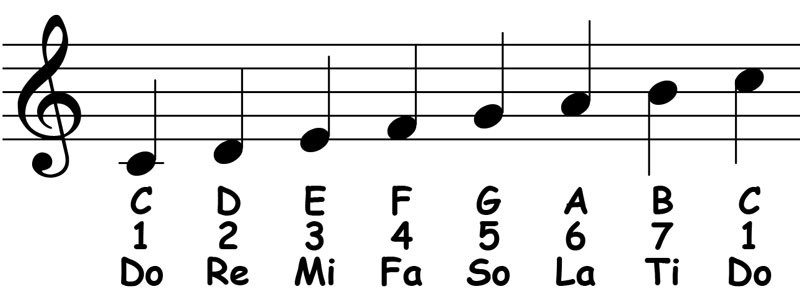
The C Major Scale:
The C Major scale is the easiest to learn because it uses only the white keys on a piano, with no sharps or flats.
The notes are: C-D-E-F-G-A-B-C.
The syllables used for singing the scale are called solfège: do-re-mi-fa-sol-la-ti-do.
Notes and Structure
Notes: C, D, E, F, G, A, B
Key Signature: None (no sharps or flats)
Pattern: The scale is built using a pattern of whole and half steps:
Why it's important
Ease of Use: The C major scale is the most straightforward to learn on the piano because it only uses the white keys, making it an excellent foundation for beginners.
Musical Baseline: It serves as a reference point for understanding key signatures and other musical concepts before introducing sharps and flats.
Commonality: It is one of the most frequently used keys in music, with many simple songs written in C major.
Lesson 3: Sad and Serious - The Minor Scale
Learning Objectives:
Introducing the Minor Scale
The A Natural Minor Scale:
A minor is called the relative minor of C major because it uses the same notes (all white keys) but starts and ends on A.
The notes are: A-B-C-D-E-F-G-A.
Listen to the A minor scale. Can you hear the difference in feeling compared to the C major scale?
Assessment
Part I: Multiple Choice
Choose the letter of the correct answer.
1. What is the main tune of a song called?
a) Rhythm
b) Harmony
c) Melody
d) Tempo
2. The distance between two notes is called a(n):
a) Interval
b) Scale
c) Tone
d) Chord
3. Which type of scale is known for its happy and cheerful sound?
a) Minor scale
b) Major scale
c) Chromatic scale
d) Pentatonic scale
4. What is the pattern of whole (W) and half (H) steps for a major scale?
a) W-H-W-W-H-W-W
b) W-W-H-W-W-W-H
c) W-H-W-H-W-H-W
d) H-W-W-H-W-W-W
5. If the A minor scale and C major scale use the same notes, what is their relationship called?
a) Parallel
b) Adjacent
c) Relative
d) Opposite
Part II: Application
1. Describe the emotional difference you hear between a major scale and a minor scale.
2. On a musical staff or blank sheet of paper, write the notes for the C Major scale.
3. Give an example of a song in a major key and a song in a minor key.
4. What is the difference between a step and a skip in terms of musical intervals?
5. Explain why the C major scale is often a good starting point for learning about scales.


























HEALTH VI: COMMUNITY HEALTH
A. Healthy School and Community Environments
1. Characteristics of Healthy Environments
1.1. Physical environment
A healthy physical environment is the tangible, or touchable, part of a place that supports good health.
Safe: The school and community should be free from physical dangers.
In a school: Buildings are made with safe, non-toxic materials and are properly maintained. Emergency exits are clearly marked, and playgrounds are free of hazards.
In a community: Streets have proper lighting, sidewalks are well-maintained, and there are designated safe zones for children.
Clean: A clean environment helps prevent the spread of diseases and promotes a sense of well-being.
In a school: Classrooms, restrooms, and the canteen are regularly cleaned and disinfected. Garbage cans are available and properly managed.
In a community: Waste management programs are strictly implemented, and roads and sidewalks are free from litter.
With good air and water quality: Clean air and water are essential for good health.
In a school: Classrooms have proper ventilation, and clean drinking water is available through fountains or dispensers.
In a community: Water sources are clean and regularly checked for safety. Public spaces are not exposed to excessive pollution.
Aesthetically pleasing: A visually appealing environment can boost a person's mood and motivation.
In a school: There are green spaces like gardens and potted plants. Walls may be painted in pleasing colors.
In a community: Parks, plazas, and public areas are well-maintained and decorated with plants and art.
With flexible spaces: This includes spaces for both learning and recreation.
In a school: Playgrounds, sports facilities, and school fields are clean and safe for students.
In a community: There are clean and accessible parks, sports facilities, and recreational areas for everyone.
1.2. Psychosocial environment
The psychosocial environment refers to the social and emotional factors that affect a person's well-being and sense of belonging.
Warm atmosphere: An environment where everyone feels welcome and supported.
In a school: Teachers, staff, and students are friendly and approachable. There is a culture of kindness and encouragement.
In a community: Neighbors interact positively, and there is a strong sense of civic pride and camaraderie.
Healthy interpersonal relations: Positive and respectful relationships among people.
In a school: Students learn to cooperate and communicate well with their classmates.
In a community: Community members, including leaders and youth, participate actively in community activities and show respect for one another.
Free from abuse and discrimination: Everyone feels safe and valued, regardless of their background.
In a school: The school has a clear policy against bullying, and all students feel respected. Counseling services are available to students.
In a community: The community is inclusive, and people from different backgrounds feel safe and welcome.
2. Ways of Building and Maintaining Healthy Environments
Active participation in school
For the physical environment:
For the psychosocial environment:
Active participation in the community
For the physical environment:
Families: Practice proper waste management at home, plant trees and gardens in the neighborhood, and maintain cleanliness around their properties.
Community Leaders: Implement strong waste management and segregation programs, build and maintain clean parks and sports facilities, and ensure roads and other infrastructure are safe.
Youth: Participate in community clean-up drives and local environmental projects.
For the psychosocial environment:
Families: Respect their neighbors, participate in local gatherings and activities, and help build a peaceful neighborhood.
Community Leaders: Promote positive interaction among residents and organize activities that foster a sense of belonging.
Youth: Join community activities and show discipline in waste management and road safety.
B. Keeping Homes, Schools, and Communities Healthy through Proper Waste Management
Overview
This lesson for Grade 6 Health provides you with practical knowledge and skills for proper waste management. It focuses on identifying, separating, and handling different types of waste.
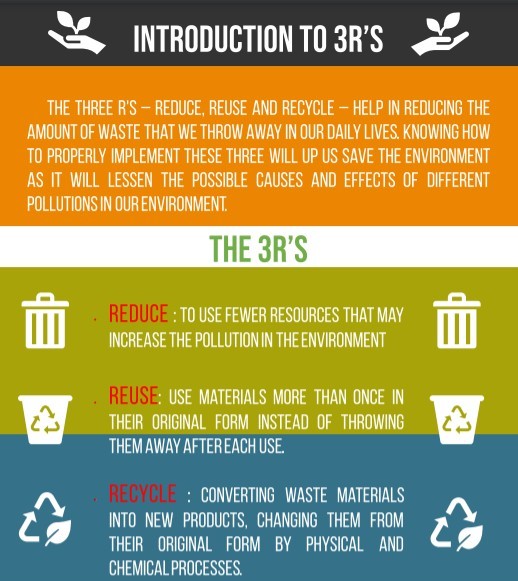
The lesson emphasizes the "3 Rs" (Reduce, Reuse, and Recycle) and highlights the importance of safe disposal, particularly for hazardous materials, to maintain a clean and healthy environment.
1. Identification and Separation of Waste
The first step to proper waste management is knowing what kind of waste you have. This process is called waste segregation and involves sorting trash into different categories based on how they decompose.
1.1 Biodegradable Waste
What it is: Waste materials that can be broken down naturally by microorganisms like bacteria and fungi. When left in a compost pile, these wastes decompose and return nutrients to the soil.
Examples:
Paper: Old newspapers, used paper towels, and cardboard.
Kitchen Waste: Leftover food, fruit and vegetable peelings, eggshells, and coffee grounds.
Yard Cuttings: Dried leaves, twigs, and grass clippings.
1.2 Non-biodegradable Waste
What it is: Materials that do not decompose easily and can remain in the environment for hundreds or even thousands of years. These wastes can cause environmental problems if not properly managed.
Examples:
Plastics: Plastic bottles, bags, wrappers, and containers.
Styrofoam: Food containers and packaging materials.
Glass: Bottles and broken glass.
Cans: Aluminum and tin cans.
1.3 Hazardous Waste
What it is: Waste that is dangerous and potentially harmful to human health or the environment. It requires special handling to prevent contamination.
Examples:
Chemicals: Empty spray cans, cleaning fluids, and pesticides.
Used Batteries: Batteries contain toxic metals like lead and cadmium.
Expired Medicines: Old medicines can be harmful if not disposed of properly.
2. Proper Waste Management
Proper waste management uses the "3 Rs" (Reduce, Reuse, and Recycle) to minimize the amount of trash that ends up in landfills.
2.1 Waste Reduction (Reuse)
Waste Reduction: This is the best way to manage waste. It means creating less garbage in the first place by choosing products with less packaging and minimizing food waste.
Example in School: Use refillable pens and minimize printing by submitting digital documents.
Reuse: This means finding a new purpose for old items instead of throwing them away.
Example in Home: Use old jars as containers, turn used paper into notepads, or donate old clothes and books.
2.2 Waste Storage
Separate Containers: Waste should be stored in separate, clearly labeled containers for biodegradable, non-biodegradable, and hazardous waste.
For Biodegradable: Use a designated compost bin or container.
For Non-biodegradable: Use a separate bin for recyclables like plastic, glass, and metal.
Tight-fitting Containers: Use sealed containers to prevent spills and keep pests away.
2.3 Waste Disposal
Composting (For Biodegradable Waste): Organic waste like food scraps and yard cuttings can be turned into a nutrient-rich fertilizer called compost. This process reduces landfill waste and enriches the soil.
Recycling (For Non-biodegradable Waste): Recyclable materials like plastic, glass, and paper can be collected and processed into new products. This conserves natural resources and reduces pollution.
Proper Disposal of Hazardous Waste: Hazardous waste should never be thrown in regular trash. It must be collected and brought to designated special facilities for safe disposal. This is a task that should be handled by adults.