EPP VI Lesson: Agriculture: Propagating Trees and Fruit Trees
Overview
This module introduces you to the importance of planting and propagating trees and fruit-bearing trees. You will learn the benefits of tree planting for families and communities and will identify successful local orchard growers. The lesson emphasizes the practical application of scientific knowledge in agriculture and highlights the potential for livelihood through marketing seedlings.
What is Propagation?
Propagation is the process of creating new
plants from an existing one. Think of it like
a plant having a baby!
It's how gardeners and farmers make sure
they always have a supply of their favorite
plants, fruits, and flowers.
It is a vital skill in agriculture and gardening that helps increase food production, earn money, and even save certain types of plants from disappearing.
Two Main Types of Propagation
Sexual Propagation (using seeds)
This is the most natural way for plants to make new ones.
It happens when pollen from a male plant part fertilizes an egg in a female plant part, which creates a seed.
Result: The new plant that grows from the seed will have a mix of traits from both parent plants, so it will be a little different from each. This is how new and stronger plant varieties are sometimes created!
Example: Planting a mango seed to grow a new mango tree.
Asexual Propagation (using other parts of the plant)
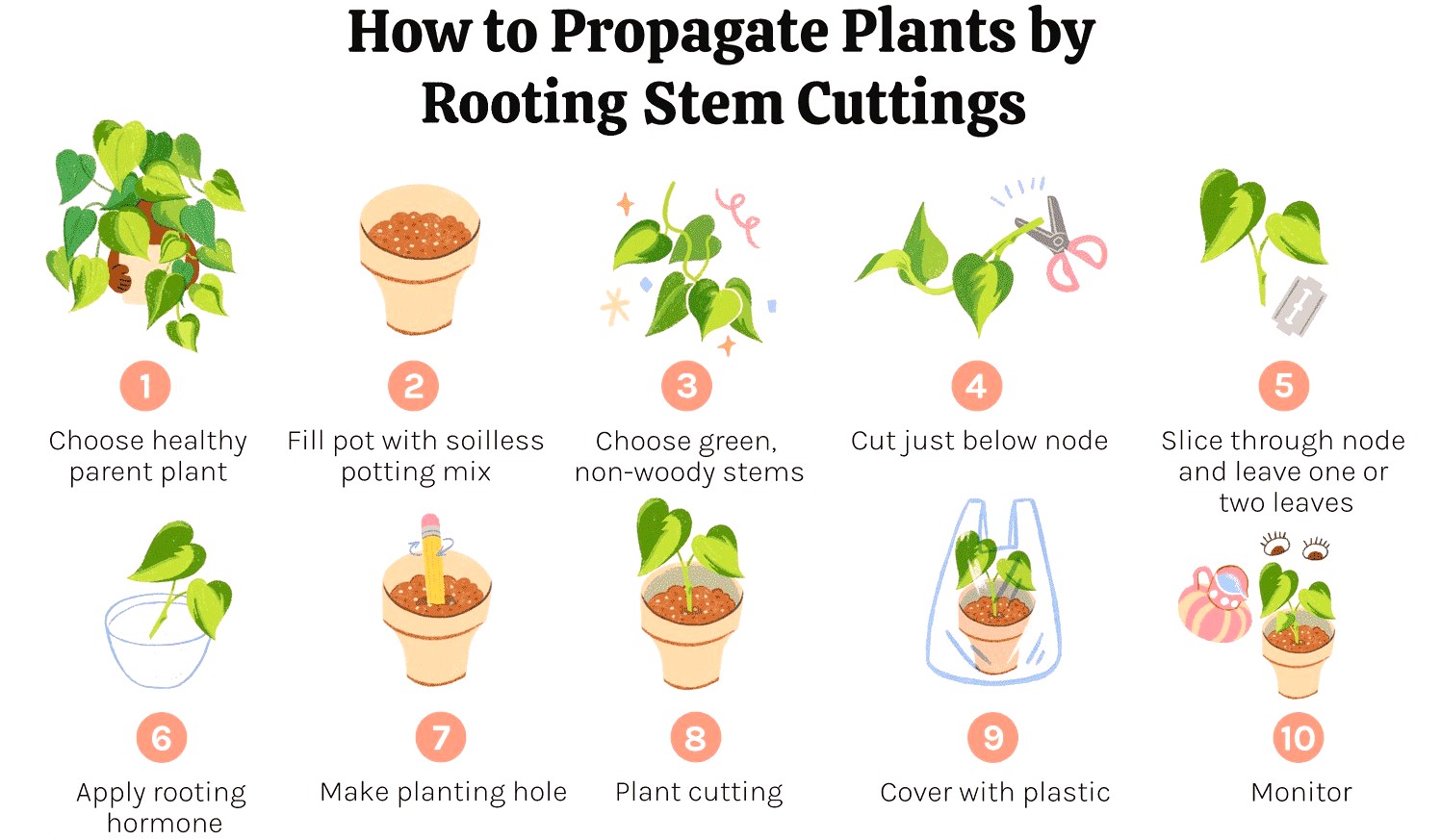
This method is also called vegetative propagation. Instead of a seed, you use a part of a single parent plant, like a stem, root, or leaf, to grow a new one.
Result: The new plant will be an exact copy, or clone, of the parent plant. This is great for keeping special traits, like a specific color of flower or a very sweet fruit.
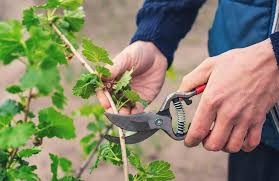
Example: Taking a stem cutting from a rose bush and putting it in water until it grows roots.
Why is Propagation Important?
1. For Food: Propagation helps farmers grow a steady supply of fruits and vegetables for us to eat. Asexual methods can also produce crops that grow and produce fruit much faster.
2. For Livelihood: People can earn money by selling the fruits they grow or by selling the new plants (called seedlings) they have propagated.
3. For Conservation: This method can help save rare or endangered plants by creating many new copies of them to ensure they don't go extinct.
4. For Quality: With asexual propagation, you can make sure that all your new fruit trees produce the same kind of delicious fruit, unlike when you plant seeds.
5. For Efficiency: Some plants don't produce seeds or have a long time before they bear fruit. Asexual propagation methods, like grafting, can help these plants grow more quickly and bear fruit sooner.
Scientific Practices in Propagating Trees and Fruit-Bearing Trees
Propagation of trees and fruit-bearing trees is the process of producing new plants from seeds, cuttings, or other plant parts. To ensure success, farmers and gardeners follow scientific practices—systematic methods that are based on observation, experimentation, and proper care of plants.
1. Selection of Seeds or Planting Materials
Example: In tropical climates like the Philippines, mango, guava, and papaya thrive well.
2. Preparation of Soil and Planting Site
3. Proper Planting Methods
4. Propagation Techniques
Scientific practices in propagation include both sexual and asexual methods:
1. Sexual Propagation (Seeds):
Growing plants directly from seeds.
Common for papaya, santol, or lanzones.
Advantage: seeds are easy to collect and inexpensive.
Disadvantage: growth takes longer, and fruits may vary in quality.
2. Asexual Propagation (Vegetative):
Using parts of the parent plant (cuttings, grafting, budding, marcotting, tissue culture).
Common for mango, calamansi, and guava.
Advantage: produces plants identical to the parent, with faster fruit-bearing capacity.
5. Care and Maintenance
6. Pest and Disease Management
7. Record-Keeping and Observation
8. Harvesting and Post-Propagation Care
Summary
Scientific practices in propagating trees and fruit-bearing trees include:
By following these practices, families and communities can ensure healthy growth, high yield, and sustainable production of trees and fruit-bearing trees.
Benefits to Families and Communities
Planting and propagating trees and fruit-bearing trees provide numerous advantages that impact families and the wider community both environmentally and economically.
Benefits to Families:
1. Source of Food and Nutrition: Fruit-bearing trees provide a sustainable and healthy food source. For example, mangoes, bananas, and guavas are rich in vitamins and minerals that can improve family health.
2. Added Income: Families can sell extra fruits or seedlings to earn additional income. Some families have even turned small plots into profitable home-based businesses.
3. Construction Materials and Fuel: Trees can provide wood for building and for fuel. For instance, coconut trees can be used for construction, and their fronds can be used for kindling.
4. Improved Air Quality and Cooler Homes: Trees act as natural air filters, absorbing carbon dioxide and releasing oxygen. They also provide shade, which can help cool homes naturally and reduce the need for air conditioning.
Benefits to the Community:
1. Environmental Protection: Tree roots hold soil in place, preventing soil erosion, which can lead to landslides. They also help prevent floods by absorbing excess rainwater.
2. Enhanced Biodiversity: Trees and fruit trees serve as habitats for wildlife like birds, bees, and other insects. This helps maintain a balanced ecosystem.
3. Improved Water Supply: Trees play a crucial role in the water cycle. Their root systems help filter water as it seeps into the ground, contributing to a clean, high-quality water supply.
4. Aesthetics and Recreation: Trees and fruit trees contribute to a beautiful landscape, making cities and parks more pleasant and inviting. This promotes recreation and a sense of well-being.
5. Windbreaks: During typhoons and storms, trees can act as windbreaks, slowing down strong winds and protecting homes and crops from damage.
Identifying Successful Orchard Growers
Learning from successful orchard growers can provide valuable insights into turning tree propagation into a profitable business. These entrepreneurs demonstrate the power of hard work, knowledge, and determination.
Examples of Successful Filipino Orchard Growers:
Editha Aguinaldo Dacuycuy
("The Dragon Fruit Lady"): Based in Burgos, Ilocos Norte, she started her dragon fruit business to help with her daughter's health condition. Her farm has since expanded and now produces a variety of dragon fruit products.
Alfredo M. Yao
("The Juice King of the Philippines"): The founder of Zest-O Corporation, he also owns a fruit farm. His story is an inspiration, proving that one can rise from humble beginnings to create a successful agricultural-based empire.
Patricio Base:
A successful farmer in Alicia, Isabela, who used to plant rice but found more success in growing watermelons, honeydew melons, and papayas. He was able to send all his children to college with his earnings.



Using Technology in Survey for Fruit-Bearing Tree Propagation and Marketing
A. Introduction
In the past, surveys were done by going house to house, interviewing people, or writing down answers on paper. Today, technology makes surveys faster, easier, and more accurate.
With the use of mobile phones, computers, and the internet, students, farmers, and communities can gather useful information to improve planting practices and market strategies.
B. Applications of Technology in Conducting Surveys
1. Elements to Be Observed in Planting Trees and Fruit-Bearing
2. Market Demands for Fruits
3. Sources of Fruit-Bearing Trees
4. Famous Orchard Farms in the Country
C. Summary
Technology is a powerful tool in conducting surveys. With smartphones, computers, and internet access, it is now easier to:
By combining traditional agricultural knowledge with modern technology, learners and communities can make planting and marketing of fruit-bearing trees more effective and sustainable.
Output Requirement
Grade 6 – EPP (2nd Quarter)
Topic: Using Technology in Survey for Fruit-Bearing Tree Propagation and Marketing
Task Title: “Tech-Enabled Survey on Fruit-Bearing Trees”
Instructions for Learners:
You are tasked to conduct a simple technology-based survey in your community (classmates, neighbors, or relatives) to gather information about fruit-bearing tree propagation and marketing.
Use available technology such as mobile phones, online survey tools (Google Forms, Messenger Polls, Facebook Polls), or even SMS/Calls to collect responses.
Your output must include the following:
Part A. Survey Questionnaire (5–7 items)
Prepare short, clear questions that address the following areas:
Elements observed in planting trees/fruit-bearing trees (soil, sunlight, spacing, water, etc.)
Market demand for fruits (Which fruits do people often buy? When?)
Sources of seedlings/fruit-bearing trees (nurseries, DA offices, local farmers, etc.)
Famous orchard farms that respondents know in the community or in the country.
(Example: “What fruit do you buy most often in the market?”)
Part B. Data Collection
Collect at least 10 responses using any technology available to you.
Present your data in a table or chart (you may draw manually or use Excel/Google Sheets).
Part C. Analysis and Reflection
Answer the following guide questions:
Part D. Final Output Submission
Your final project should contain:
You may submit your work in:
Printed paper (handwritten or typed), OR
Digital file (Word, Google Docs, PowerPoint) with screenshots of your survey.