Grade 6 Science: The Digestive System
Overview
This lesson is designed for Grade 6 learners to explore the digestive system. You will learn about its main organs, their specific functions, and the overall process of digestion. The lesson includes hands-on activities, real-world connections, and a final assessment to ensure comprehensive learning.
Lesson 1: The Journey of Food
Learning Objectives:
What is the Digestive System?
The digestive system is a group of organs that work together to break down the food we eat into smaller, usable molecules called nutrients.
Our body uses these nutrients for energy, growth, and cell repair. The entire process involves a long tube called the digestive tract, which starts at the mouth and ends at the anus.
The Main Organs of the Digestive System:
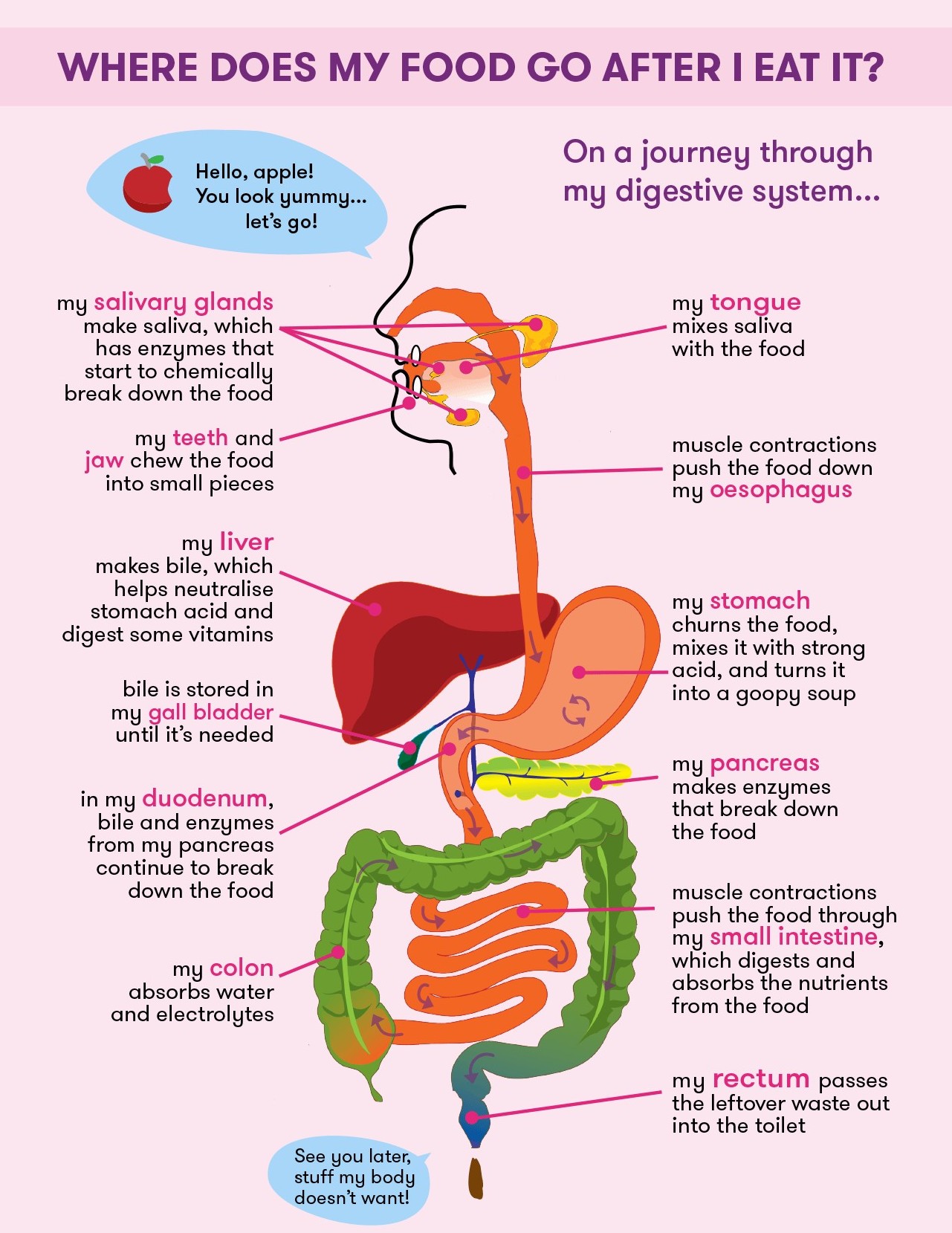
Mouth: Where digestion begins. It includes the teeth, tongue, and salivary glands.
Esophagus: A muscular tube that connects the mouth to the stomach.
Stomach: A muscular, J-shaped organ that stores and mixes food with gastric juices.
Small Intestine: A long, coiled tube where most of the digestion and absorption of nutrients occur.
Large Intestine: A wider tube that absorbs water from undigested food.
Rectum: The final section of the large intestine where waste is stored.
Anus: The opening where solid waste leaves the body.
Lesson 2: How Digestion Works
Learning Objectives:
Two Types of Digestion:
Mechanical Digestion: The physical breakdown of food into smaller pieces. It starts in the mouth through chewing.
Chemical Digestion: The chemical breakdown of food into smaller molecules. It involves digestive juices and enzymes.
Functions of Digestive Organs:
Mouth: Teeth chew and grind food, while saliva from the salivary glands starts the chemical digestion of carbohydrates.
Esophagus: Wavelike muscle contractions called peristalsis push food down to the stomach.
Stomach: Gastric juices and muscular contractions further break down food into a liquid mixture.
Small Intestine: This is where the final breakdown of food occurs. Villi, or finger-like projections, absorb nutrients into the bloodstream.
Large Intestine: Absorbs water from the remaining waste material.
Rectum and Anus: Store and eliminate solid waste (feces) from the body.
Accessory Organs and Their Functions:
Liver: Produces bile, which helps break down fats.
Gallbladder: Stores the bile produced by the liver and releases it into the small intestine.
Pancreas: Produces pancreatic juices and insulin, which help in the digestion of fats, carbohydrates, and proteins.
Lesson 3: Keeping the Digestive System Healthy
Learning Objectives:
Healthy Digestive Habits:
Eat fiber-rich foods: Fruits, vegetables, and whole grains help move food and waste through your digestive system.
Drink plenty of fluids: Water helps dissolve nutrients and prevents constipation.
Chew food properly: Chewing food well aids in digestion and prevents indigestion.
Exercise regularly: Physical activity stimulates intestinal muscles and promotes healthy digestion.
Avoid eating too fast or too much: This helps prevent indigestion and bloating.
Why is a Healthy Digestive System Important?
A healthy digestive system ensures that your body gets all the necessary nutrients and energy to function properly. When your digestive system is not working well, you might feel bloated, have a stomachache, or feel tired.
Assessment
Part I: Multiple Choice
Choose the letter of the correct answer.
1. Which organ is responsible for most of the nutrient absorption?
a. Stomach
b. Small intestine
c. Large intestine
d. Esophagus
2. The process of chewing food into smaller pieces is an example of:
a. Chemical digestion
b. Mechanical digestion
c. Peristalsis
d. Egestion
3. Which of the following is NOT an accessory organ of the digestive system?
a. Liver
b. Pancreas
c. Gallbladder
d. Esophagus
4. What is the main function of the large intestine?
a. To produce bile.
b. To absorb water.
c. To store food.
d. To break down fats.
5. What can you do to help prevent indigestion?
a. Eat as fast as you can.
b. Eat spicy food.
c. Chew your food properly.
d. Skip meals.
Part II: Short Answer
Answer the following questions in a few sentences.